The possibilities open today to anyone studying music are too broad for a course of study to exhaust them in the few years we spend working together. As a teacher, I try to bring students into contact with different practices, repertoires and ways of thinking about music, so that they have the tools to find their bearings and choose what to explore further. A piece heard in class, a writing solution or a problem that came up in rehearsal can take on a different meaning over time, when students rediscover it in their own work or artistic path.
This idea guides my work at the two conservatories where I teach, in Nocera Terinese and in Brescia: in composition as in ensemble music, I try to offer students starting points from which they can carry on their own research independently, with renewed tools.
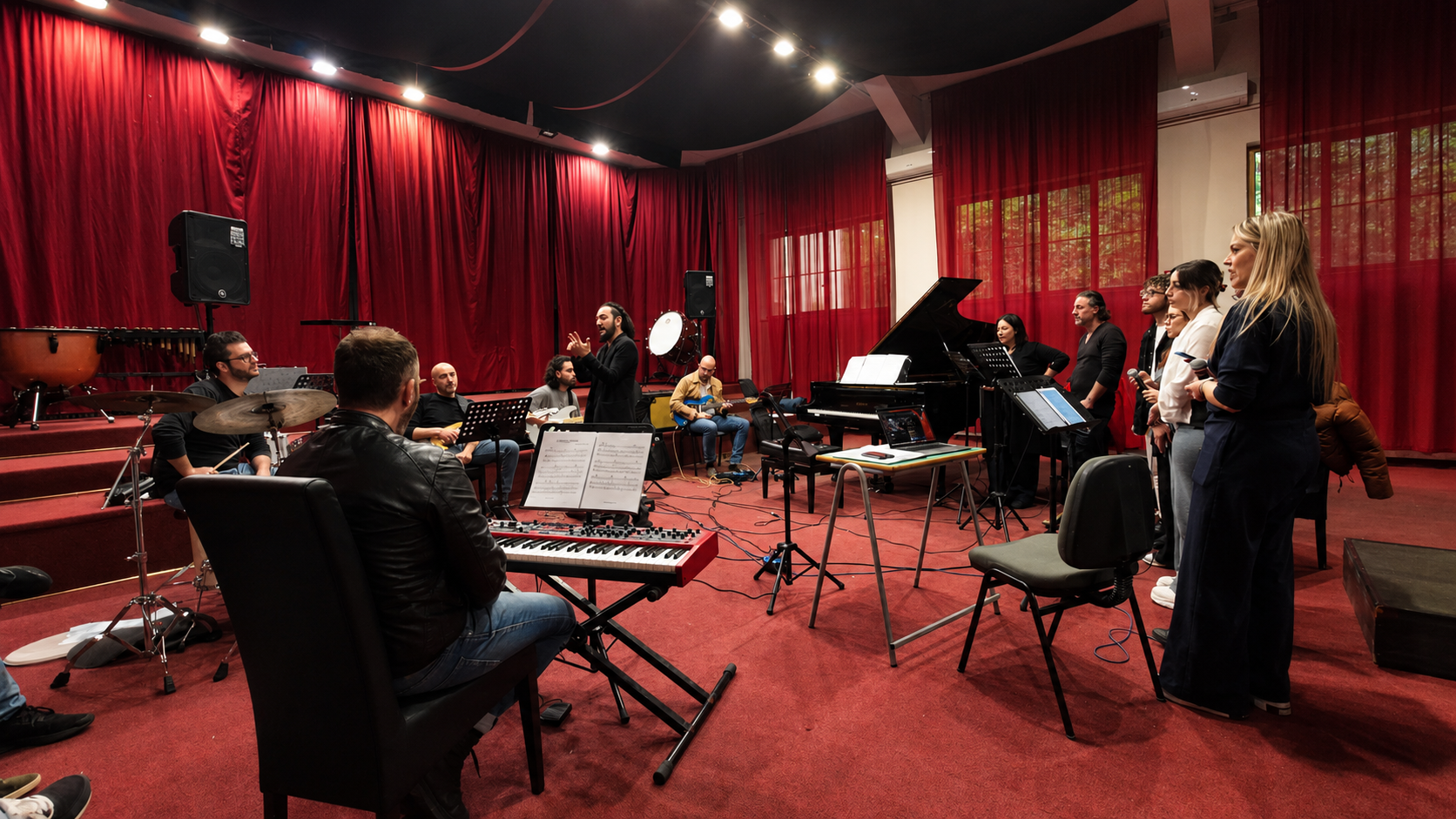
“Saverio Arlia” State Conservatory (formerly “P. I. Tchaikovsky”) — Nocera Terinese
Pop/Rock Ensemble & Creative Interaction
My teaching across the undergraduate and master’s programmes covers instrumental ensemble, vocal ensemble, pop and rock score reading, and creative rearrangement. I select repertoire according to the musical aspects I want students to explore, including how a groove is constructed, how rhythm and harmony interact, how phrases are shaped, and how the parts of an arrangement relate to one another.
In the undergraduate programme, students learn their parts by listening to recordings and work out the form and main features of each arrangement. We examine how the rhythm section, harmonic accompaniment and melodic lines interact, paying particular attention to how precisely the parts fit together, how accents are distributed across the ensemble, and how those choices shape the style of the performance.
In the master’s programme, I work with more complex repertoire and arrangements. Score reading is taught in both years. Students receive fully notated parts for each lesson and prepare them individually in advance. We work on rhythmic and melodic accuracy, the interpretation of performance markings, and stylistic decisions that the notation leaves to the performer. Students learn to read their own part in the context of the overall arrangement and in relation to the other sections of the ensemble.
In creative rearrangement, the ensemble takes an existing piece as the basis for a new version. Students analyse the piece, identify its structural elements, and decide how to reshape its form, harmony, rhythm and timbre. They develop and test their parts by playing them together, sometimes without a fully notated score. As the arrangement takes shape, they reconsider which instruments carry each musical function, how dense the texture should be, and how the parts interact. The aim is to produce a version with a distinct sonic identity.
This process develops students’ ability to think in terms of orchestration and to contribute actively to group decisions. I ask them to propose ideas, explain the musical reasoning behind them, and try out alternatives in rehearsal before deciding what works best. The ensemble shares responsibility for the overall direction of the arrangement and for assessing how each part contributes to it.
In vocal ensemble, I provide the scores and focus on vocal blend, consistency of tone and the independence of the individual lines. We study how the voice parts interact and how each contributes to the harmonic and contrapuntal texture.
Through this work, I aim to prepare students for the range of situations they may encounter as professional musicians today. These include reading a score in a modern orchestra with a rhythm section, singing as part of a backing vocal section, and developing their own part in a recording session with only broad directions. Across these settings, students need to read and interpret music, make decisions about their own parts, and adapt what they play or sing to the ensemble and the needs of the production.
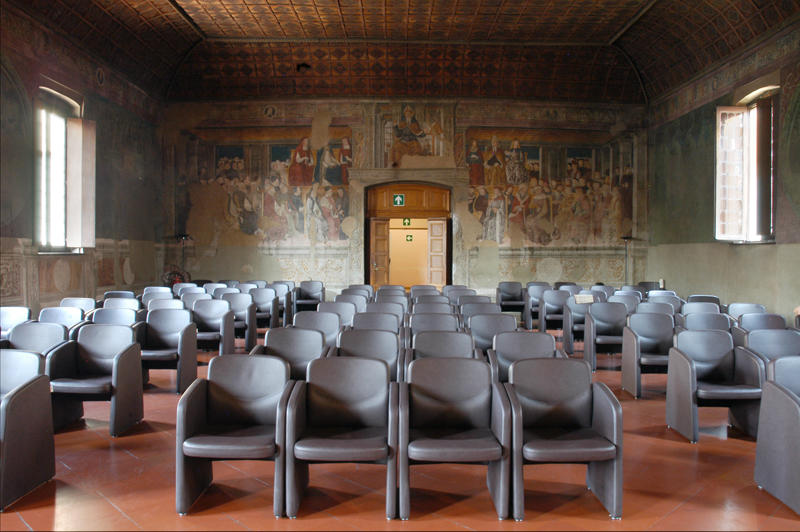
“Luca Marenzio” State Conservatory — Brescia, Italy
Pop/Rock Composition & Songwriting Techniques
I describe my approach to teaching composition as inductive. I start from the music students are writing, the music they draw on, and the questions that arise as they develop their own material. Listening, analysis and experimentation provide a basis for exploring the theory and techniques of composition. Students help shape the course of study through the musical choices they make and the difficulties they encounter along the way.
I teach songwriting, melody and harmony, musical form, arrangement and production. I explore how these areas interact, looking at how a choice of register, instrumentation or timbre can change the structure of a passage and how it is heard. As we revise a piece, we consider how closely the music reflects the student’s intention. Comparing different versions of the same material helps us hear what each compositional choice changes.
We analyse music from popular, jazz and classical traditions. I choose examples that connect with questions arising in the students’ work and use them to examine compositional techniques, approaches to form and ways of organising sound. I place particular emphasis on students’ ability to listen critically to their own work, articulate what they intend to achieve, and evaluate the effects of their choices.
Students’ own writing remains the point of departure as we explore music both within and beyond their experience. By listening to, comparing and working with this music, students develop a practical understanding of compositional principles. This is what I mean by inductive teaching. Theoretical concepts emerge as students reflect on what they hear and what happens when they apply those ideas in their own writing.